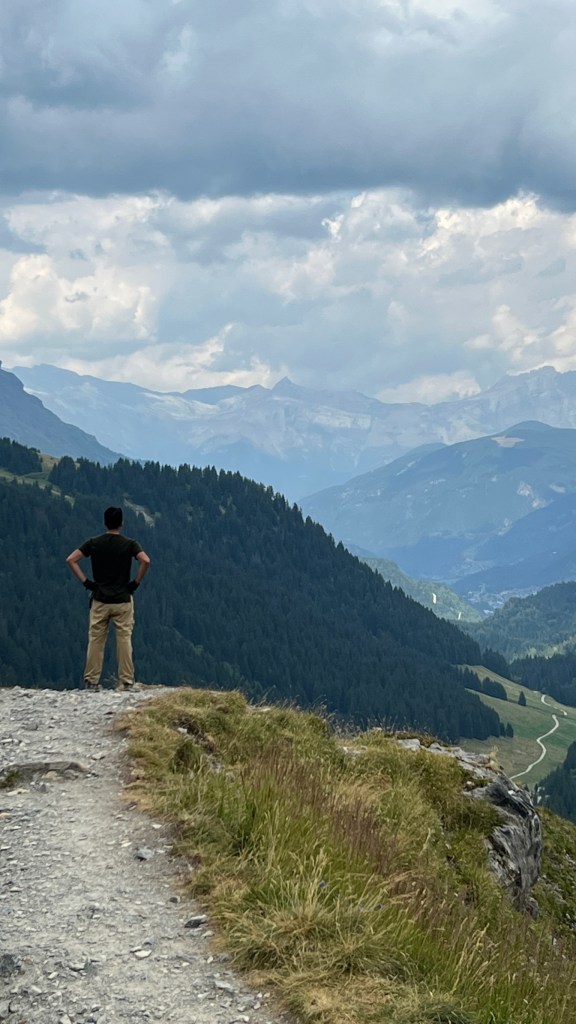
Mornings in Refugios begin bright and early at 5:30A.M. With limited restrooms and breakfast at 6:30 A.M., it was essential to get ready before everyone else. More importantly, we had to get to the next Refugio before 6 P.M. to catch dinner. It also helped to hike in the morning when temperatures were cooler. Europe was amidst a record-breaking heat wave, melting much of the glacier packs too early in the season. Some Refugios had even shut down due to a lack of water.
Before we left, I frightened my mother – our walking sticks were missing! With both my parents being patients of multiple leg surgeries, those sticks were vital for the downhill, when there is the most pressure on the joints. However, I had neatly stashed them in a corner. After a hearty breakfast, we were off. Our Destination? Refuge Croix du Bonhomme. A refuge so remote that supplies are helicoptered in.
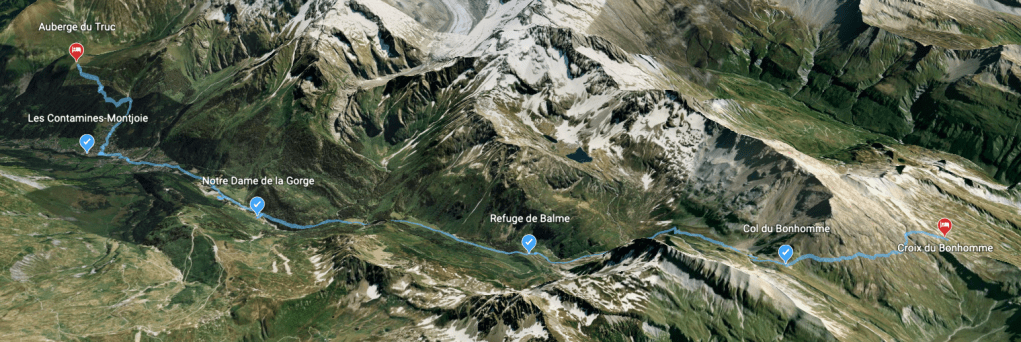
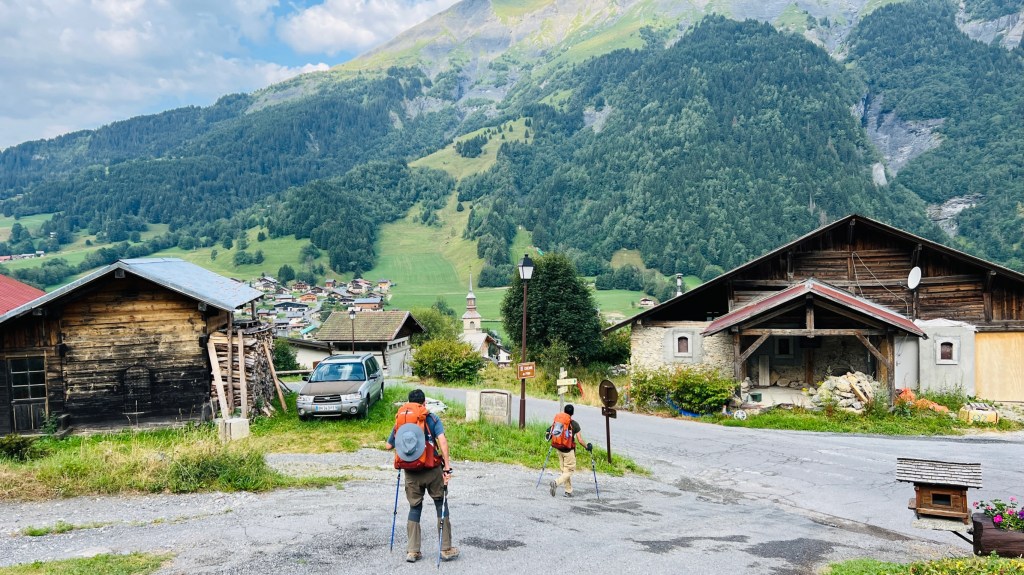
Our first pit stop was in the town of Les Contamines-Montjoie, 1600ft below Aburge du Truc, for a ham and cheese baguette, a staple in the region. We had a combination of ham, cheese, and bread every day of the trip. We also hitched a ride from the town center for a short bit to Notre Dame de La Gorge. Our ride was necessary for what was to come.
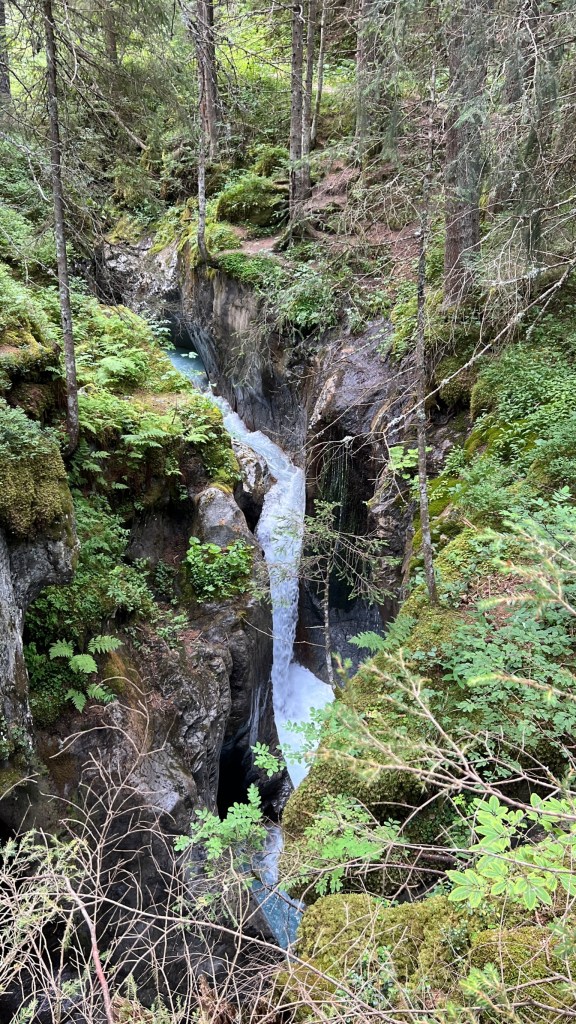
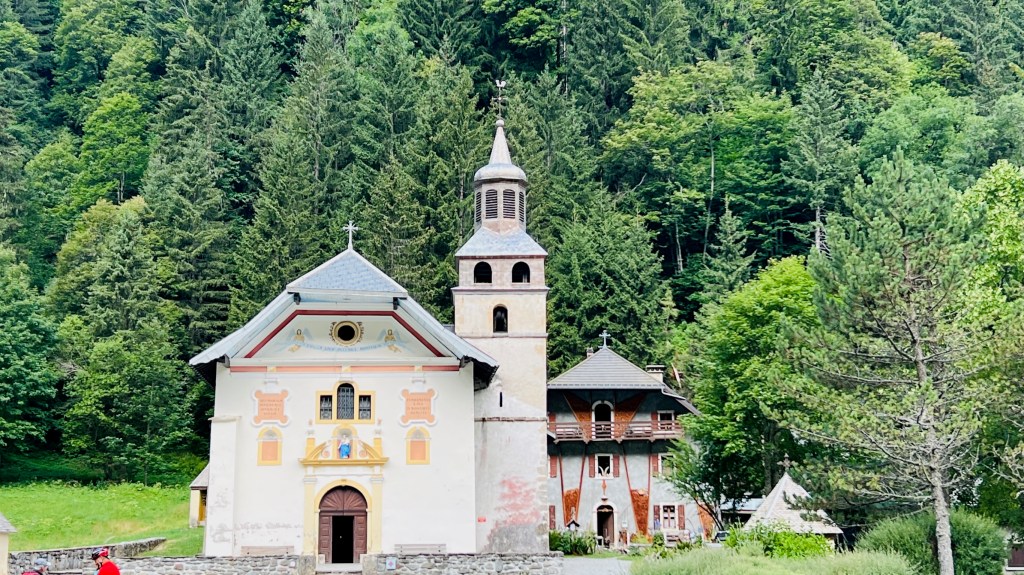
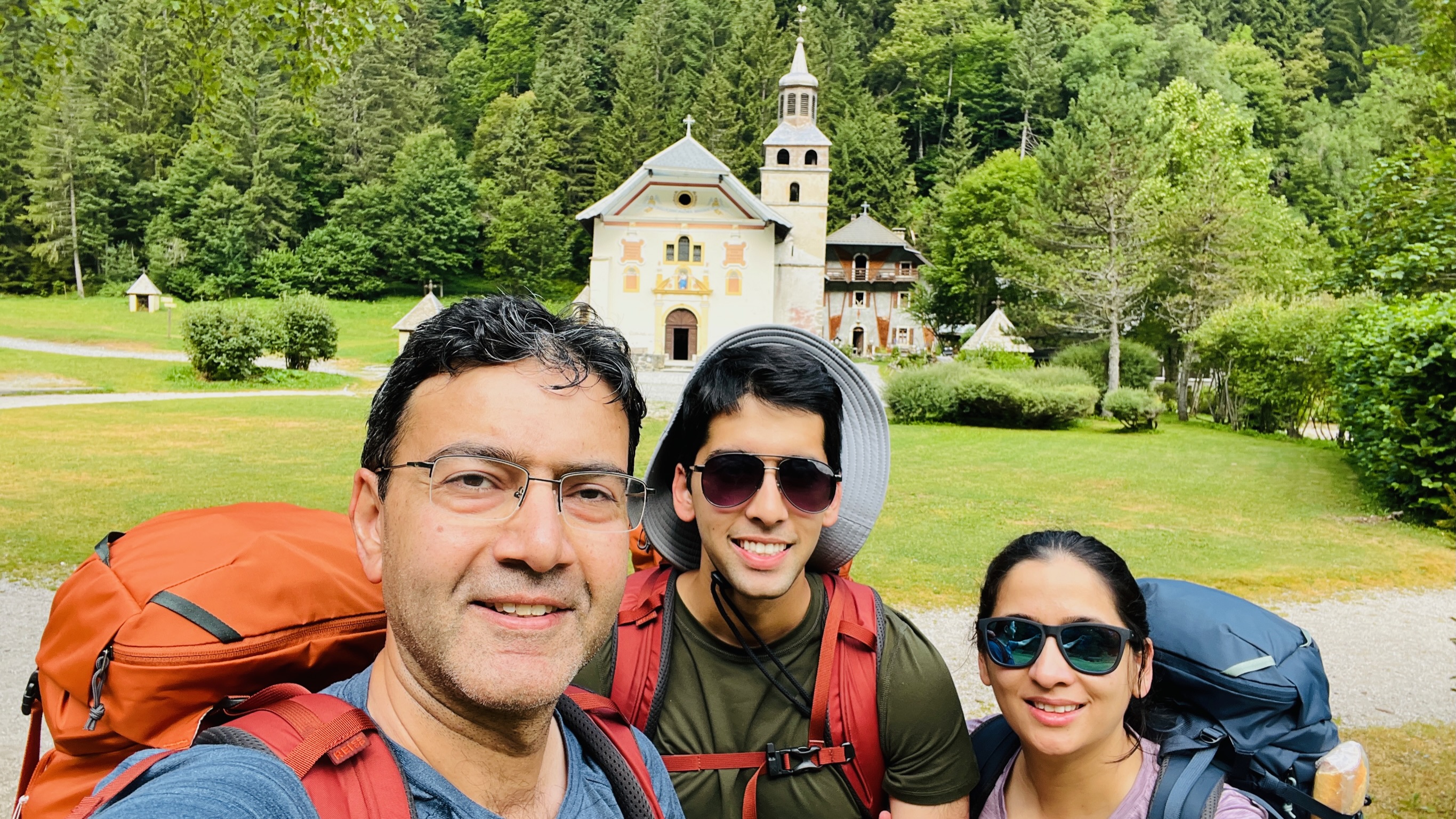
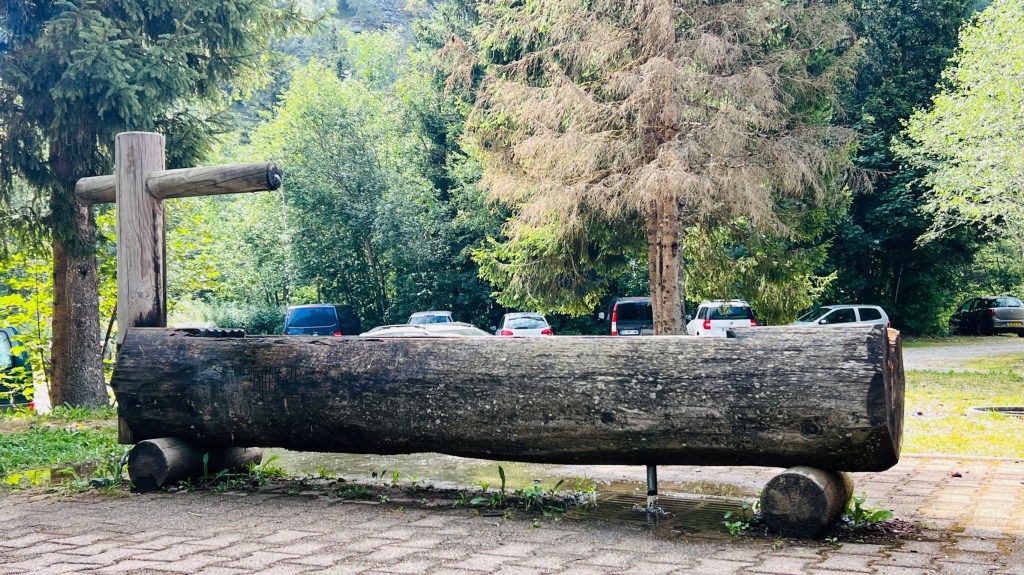
As we ascended the first third of the day’s 3000+ ft, the soaring temperatures had us cursing under our breaths. The snowcapped peaks stood naked, stripped by the Global warming-fueled European heat wave. The same heat wave beat down on us and drained our water tanks. For a moment, it seemed that we had never left Texas with all the yellow grass. But we found solace at the water fountains. These continuous spouting fountains were sourced directly by the adjacent glacier-powered river or stream. The fountains spouted into a carved-out log that drained the excess water back into the river.
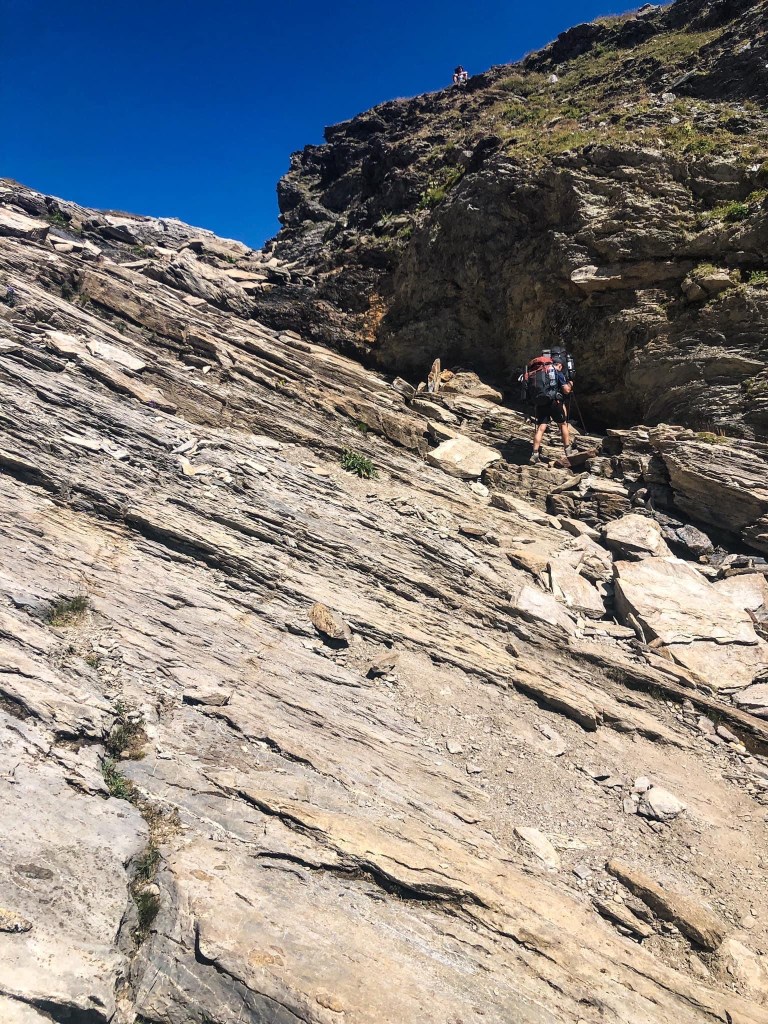
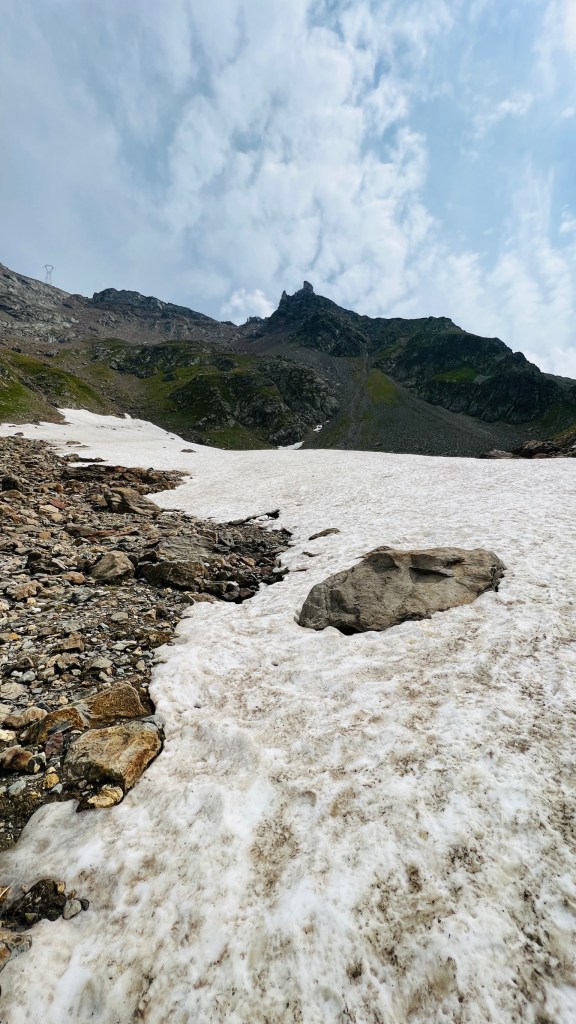
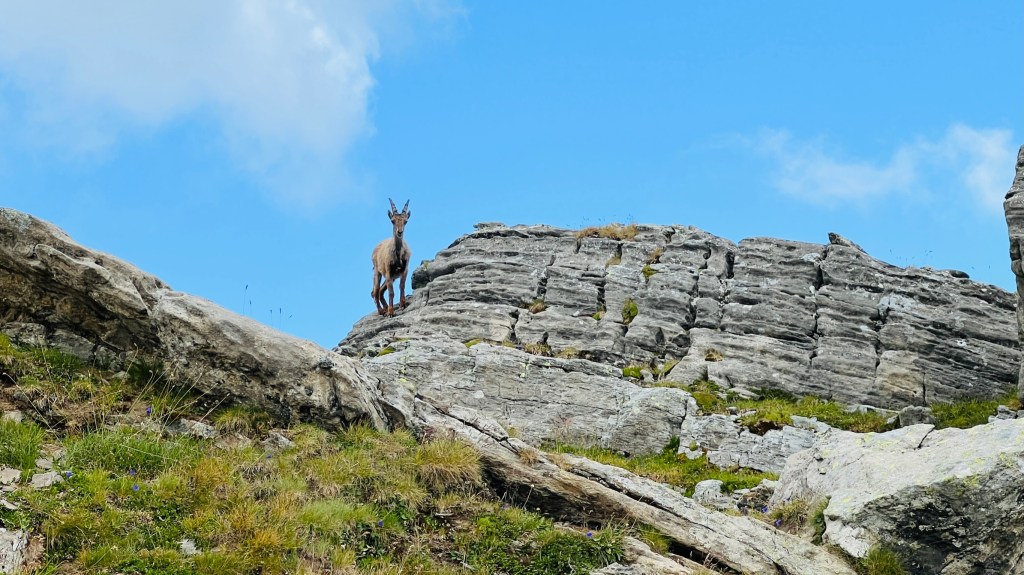
After a pitstop for a refreshing local sparkling lemonade and pies in refuge du la Balme, our last 2200ft of the ascend began, and it seemed to never end. Along the route, our path was also blocked by an aggressive Alpine Ibex. Naive as we are to this wildlife, we stood frozen, doing the only thing sensible at the time: staying far away and taking photos. However, a runner, prepping for the UTMB, nudged it to the side and opened the path to us. However, the wildlife was not the real obstacle. It was the terrain. We traversed melting ice packs, dusty roads, and crumbling boulders. The Alps were formed by the collision of the Eurasian and African tectonic plates. But in between the plates existed the pre-historic Tethys sea. As the African plate pushed itself above the Eurasian plate and gave rise to the alps, the sea evaporated, leaving behind sedimentary rock deposits. Sedimentary rocks are very susceptible to breaking down from natural forces, such as wind and rain. This phenomenon had our route itself crop up at steep angles and erode off into thin shards. It made the journey even more challenging.
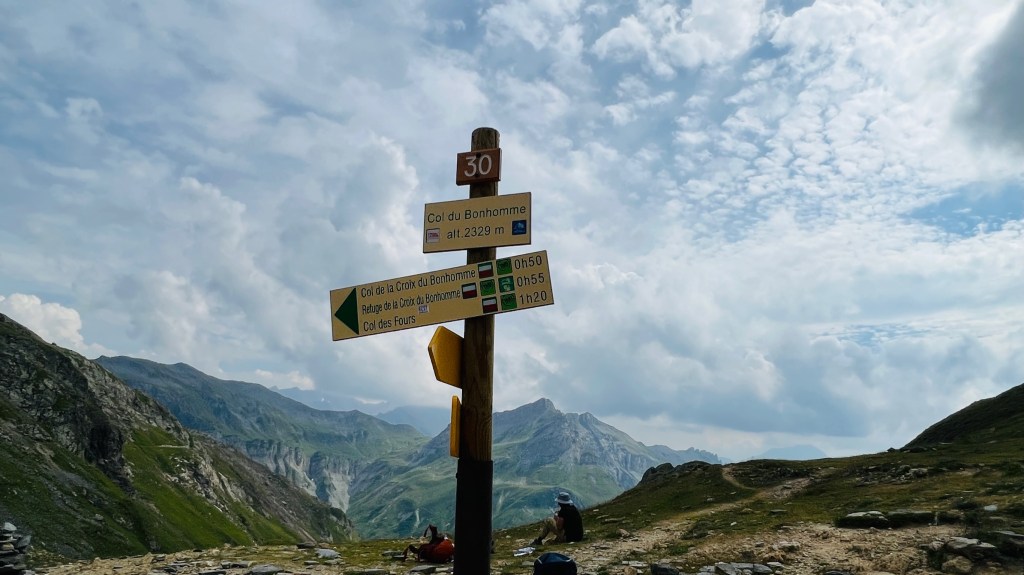
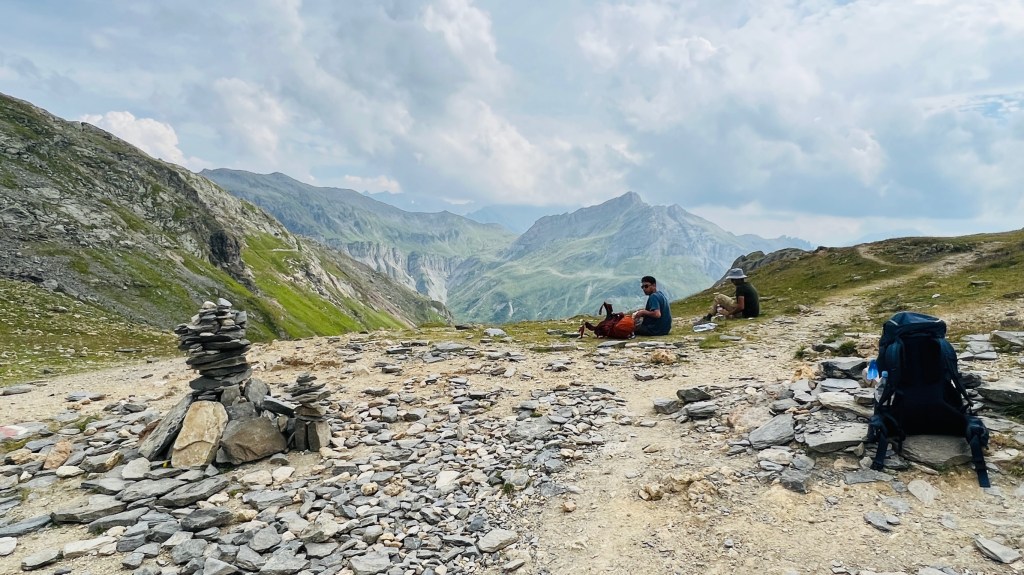
When we made it to Col de Bonhomme, we didn’t even have the energy to sit and admire the view. The sun had started to go down more than we liked, and the weather could get quite unpredictable in the latter half of the day. The last mile was the toughest, as they usually are. We were pivoting around a peak called “Tete sud des fours” as the refuge lay on the opposite side, but it was too stubborn to present itself. It felt like a Ross in Friends – Pivot, Pivot, Pivot.
Every day along the trip, we made new friends. On our second day, we met a lovely couple from Singapore. He was a tattoo artist, and she was a diving instructor. They were on their way to a music festival in Belgium and were doing the TMB along the way. They had a more significant challenge than us as they were also lugging their camping equipment. On that last ascent, we became hikers-in-arms as we urged each other on.
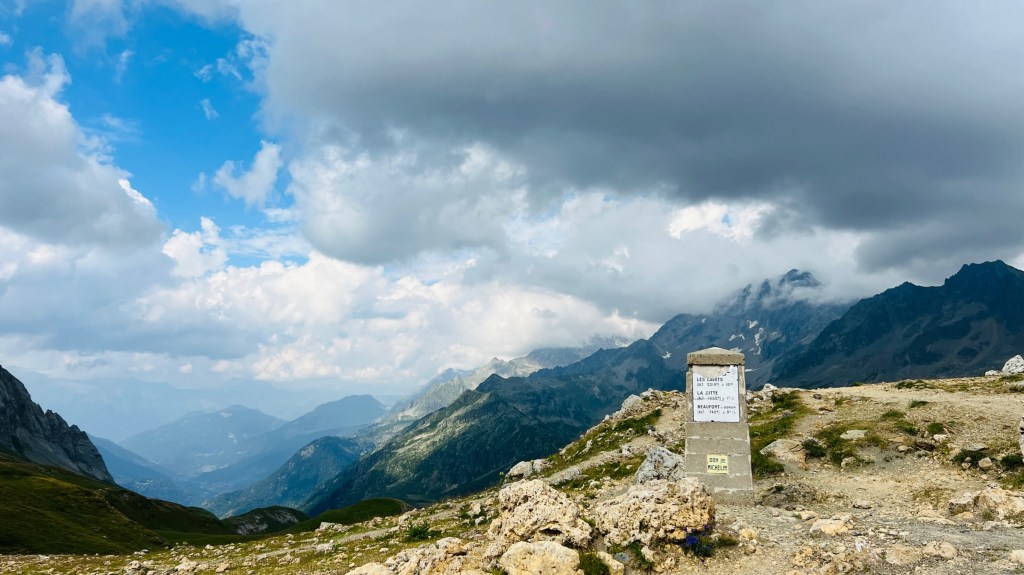
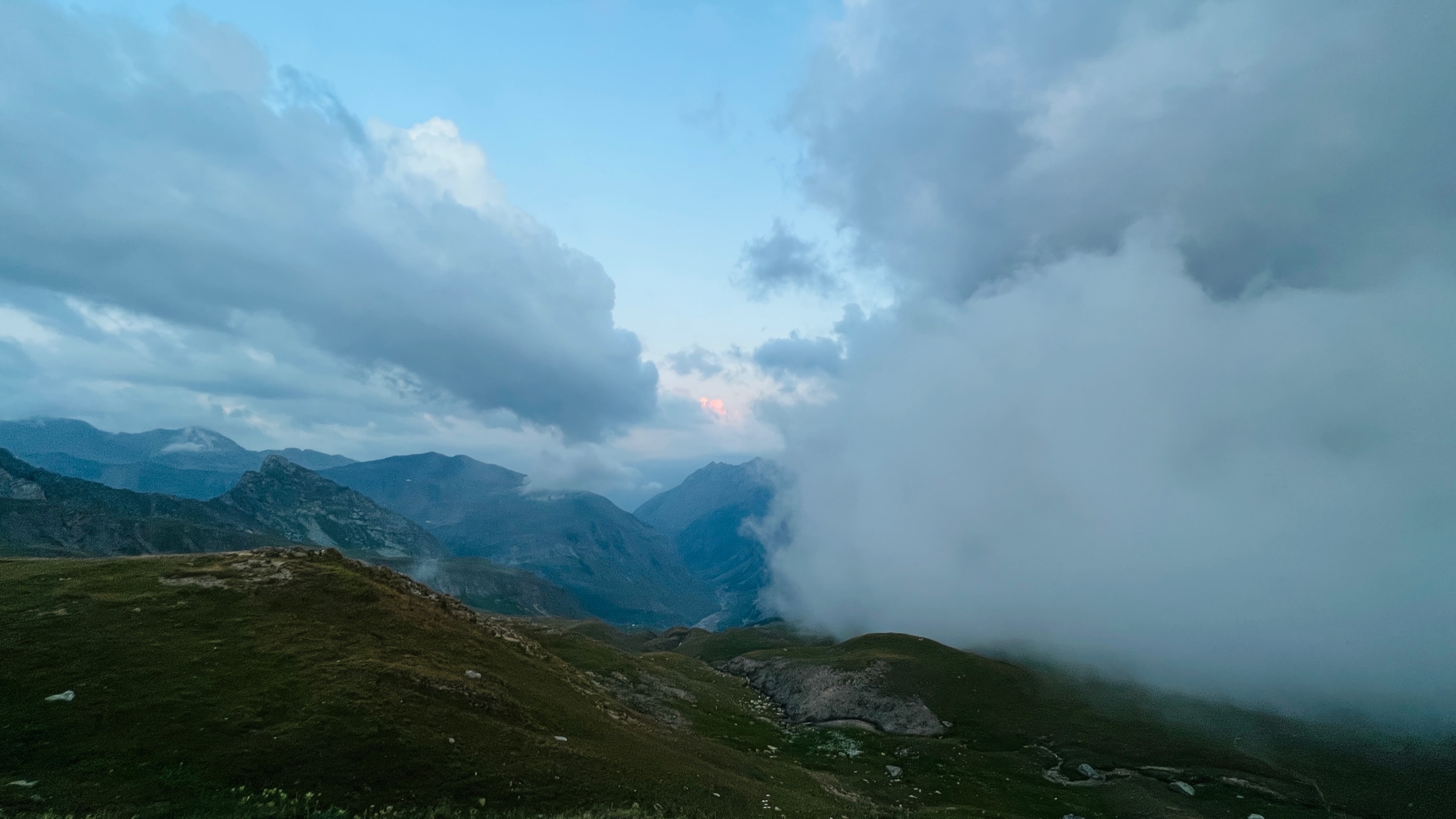
Finally, at 7 – 7:30, a full 12 hours after we left in the morning, we stumbled in as most of the refuge were midway through their dinner. We reached just in time as a thick cloud rolled in behind us, enveloping the dorm and blocking any view 2 feet away.
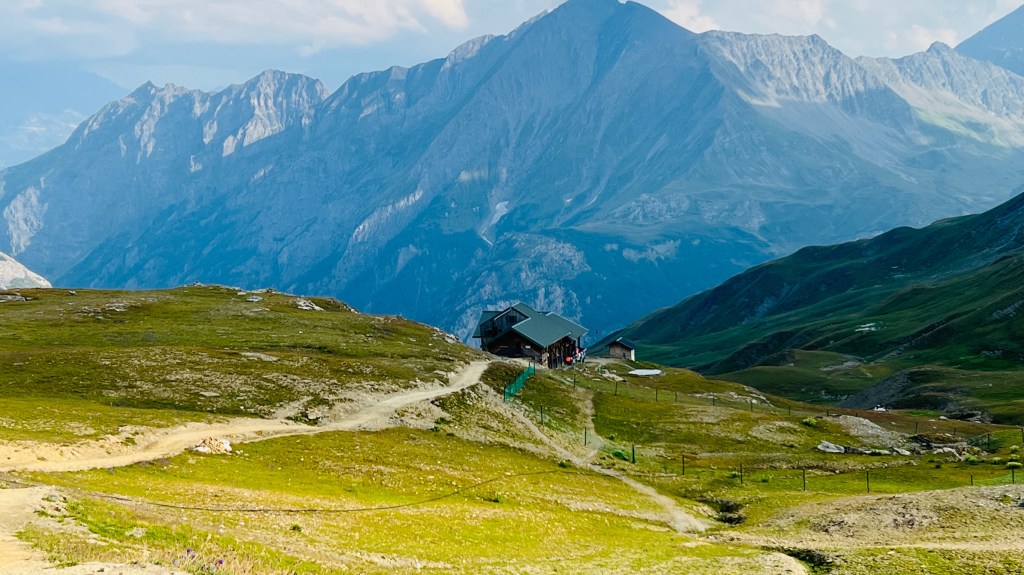
The adventure didn’t end there. The heat wave still hadn’t finished its business. It had dried up many water sources and left the 100+ hikers only 2 dry toilets outside the refuges. We had to also wash up and brush with the donkeys in the yard. Furthermore, one of the outdoor restrooms had an awkward lock mechanism that jammed and locked me inside. Since everyone was inside for dinner, I thought I was stuck there for a while or had to Slumdog Millionaire my way out of there. Thankfully, a passerby got me out of there.
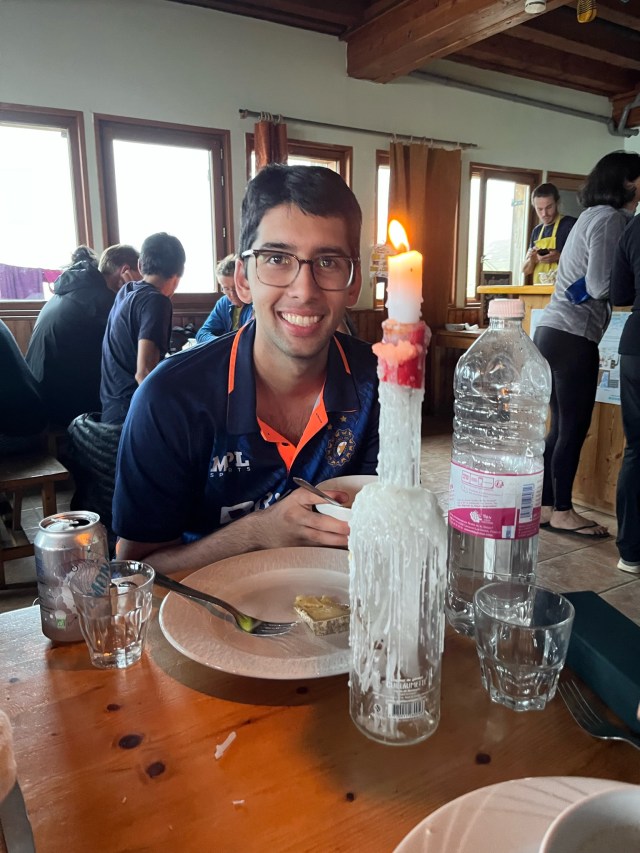
That night we found solace after the long day in the sumptuous portions of soup, pasta, and brownies – all again plated on ceramic dishes adorned by artwork. It still amazes me how the Refugios could provide such service in remote locations. Because of the location, no power cables reached such peaks, and all energy was sourced by solar panels. Therefore, to conserve electricity, our dinner was illuminated by candles held up by wine bottles.
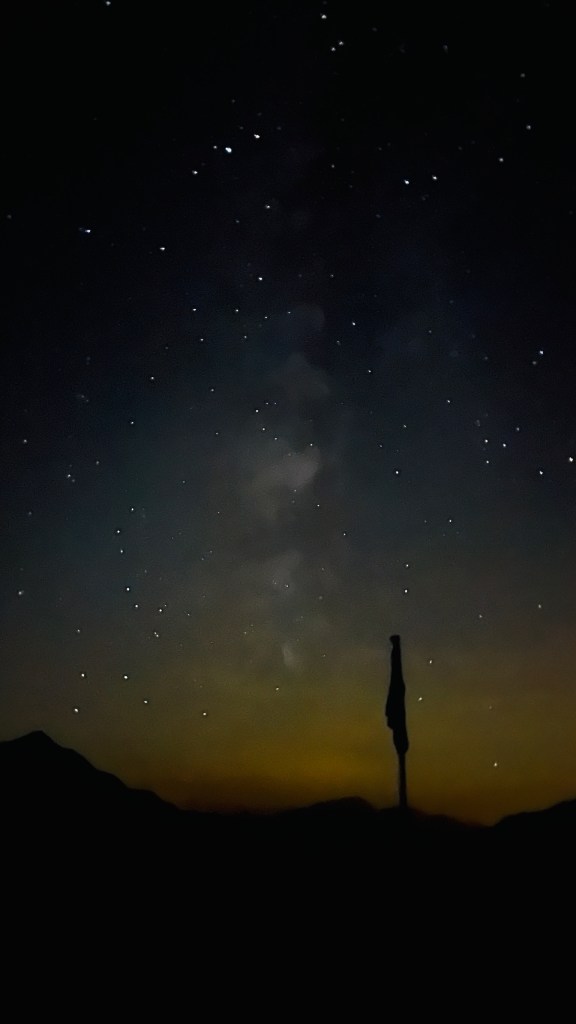
While the candlelight illuminated indoors, the milky way illuminated the outdoors. The canvas of the night sky was pristine in the mountains, and the brush strokes of the celestial bodies sparkled brightly.
Subscribe for more upcoming content :
 Conscience of Aniket